


Pigmentation
removed or lightened
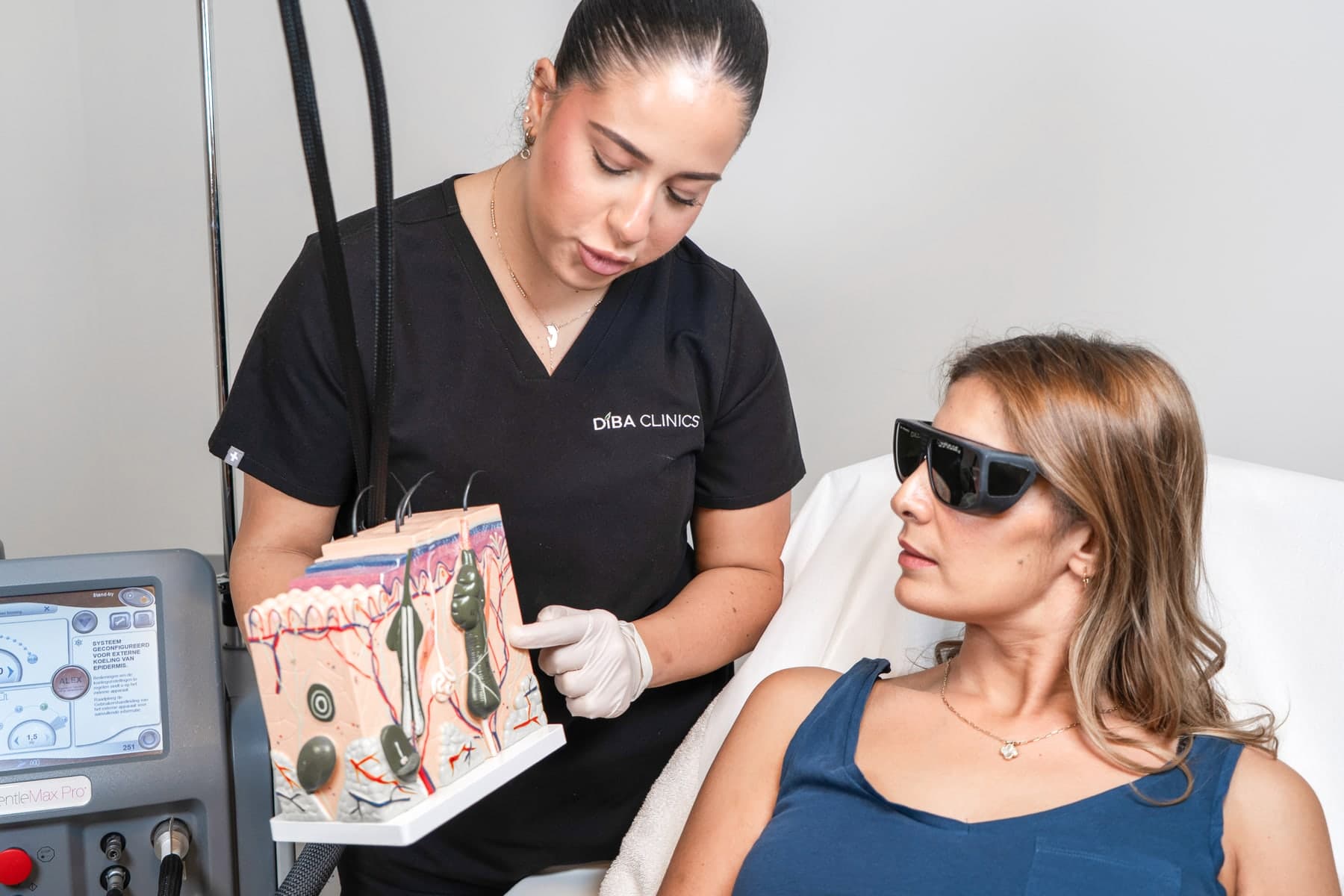
We treat pigmentation with laser, IPL and peels. Which approach fits depends on the type of spot and on your skin type. We work that out together at the consultation.
The season counts. With little sun the result holds better, so autumn and winter are the best time.
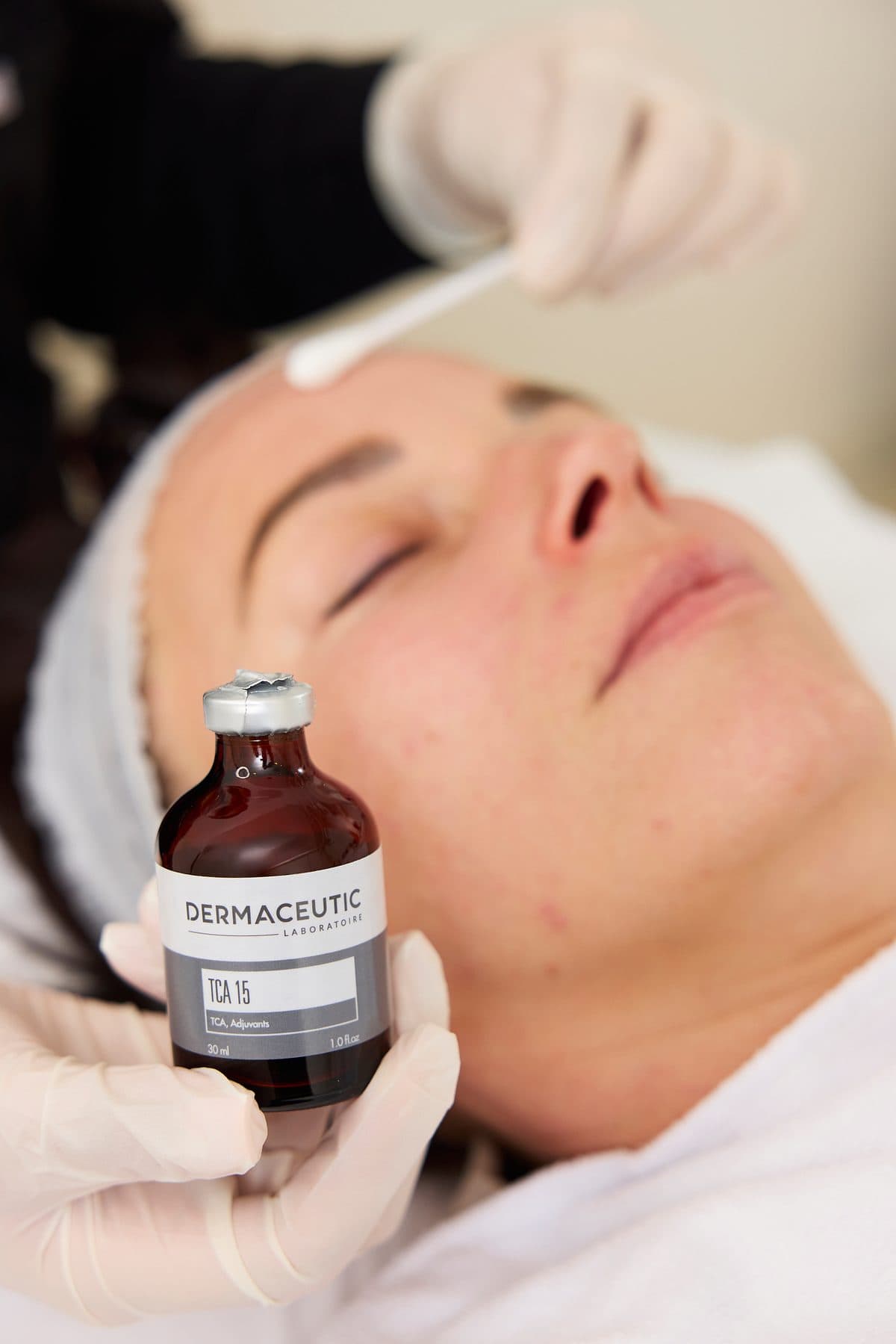
At Diba Clinics in Rotterdam we lighten pigment spots with IPL: per session € 75 for the nose, € 150 for the cheeks, € 200 for cheeks, nose and chin and € 250 for the whole face. It can also be done with medical peels, from € 140, or for stubborn pigment with a six-month Cosmelan programme for € 720, products included. Which treatment fits depends on the kind of pigment, and the skin therapist assesses that during the intake. Daily sun protection is always part of it.
The year decides
whether it will work.
The height of each bar is the average UV index in the Netherlands. Click a month and you see what happens to pigmentation then, and whether we would advise you to start. This month is already open.
Oktober
UV index 1.8Low enough to treat without the sun undoing the work.
The best moment to start. You have five months of low UV ahead.
Book your skin consultationThese are monthly averages. On a clear summer day the strength of the sun in the Netherlands is a good deal higher than what you see here, and that is the moment pigmentation forms.
Three kinds of
pigmentation
Sun damage and melasma look alike but ask for different treatment. We establish which type you have before we start. Pick the pattern that comes closest to yours.
Sun spots and age spots
lentigines, sun damage- The pattern
- On the parts that stick out: cheekbone, bridge of the nose, forehead, back of the hand and décolleté. Not symmetrical; each spot has its own shape.
- Where it comes from
- UV exposure added up over years. Each spot is a place where pigment cells have been thrown off.
- What we do first
- We establish the type, treat it specifically and then keep it in check with sun protection. Without that last part it comes back.
This is often where the most can be gained. This type usually responds well and comes back less quickly than melasma, as long as you keep the sun off it.
Symmetrical, hazy patches
melasma- The pattern
- Symmetrical across the cheeks, above the lip and on the forehead. No sharp edge but a transition, as if it fades out.
- Where it comes from
- Hormones plus UV plus heat. Pregnancy and the pill are known factors, and even heat on its own can set it off.
- What we do first
- Gently, with plenty of protection, and with the expectation that it comes back in summer. We measure per season rather than per session.
With melasma the goal is control and not disappearance. Promising anything else would be easier to sell and would not come true.
A dark mark after a spot or a wound
post-inflammatory hyperpigmentation- The pattern
- Exactly where something was. Often reddish brown at first, then browner. No dip in the skin.
- Where it comes from
- Your skin produced pigment while healing. This is not a scar, even though it feels like one.
- What we do first
- Microneedling, because that gets renewal going in the layer where the pigment sits. If it is deeper or stubborn, peels or a pigmentation programme are added. Always with sun protection, otherwise it comes back.
Alongside acne this is what we treat most often. A fresh mark partly fades on its own; what is still there after months responds well to treatment, and sun protection keeps it light.
Why pigmentation comes back
Pigment cells that have once been thrown off respond to sunlight faster the next time. So every unprotected summer adds to the one before it.
With pigmentation, daily sun protection and limiting new exposure matter at least as much as the treatment at the clinic.
- Without protectionEvery summer lays a layer on the one before. What you gain in winter you lose in July.
- With protectionThe pigmentation that is there can lighten, and little new appears.
- With protection and treatmentThis is where the most is to be gained. Do start with the protection, because without it the result does not hold.
What helps and what we advise against
With pigmentation it usually goes wrong by starting too early, not by treating too little.
This works
- Sun protection every day, on a grey day too. With pigmentation that is the most important part
- Starting in autumn, so that you have months of low UV ahead of you
- Measuring per season, because pigmentation moves with the year
- Establishing before the first treatment which type it is and how deep it sits: in the epidermis, in the dermis or in both
- A cap or a hat. It keeps off more sun than any cream does
We advise against this
- Starting in May or June. You then treat against the sun for four months and that costs you the result
- Going in hard with melasma. That stirs it up rather than removing it
- Whitening creams from the internet. They regularly contain hydroquinone or mercury, outside any supervision
- A sunbed, not even to cover it up. You make the pigmentation darker, not lighter
- Comparing in the mirror every day. Pigmentation changes over months, not days
These are the things we follow with pigmentation
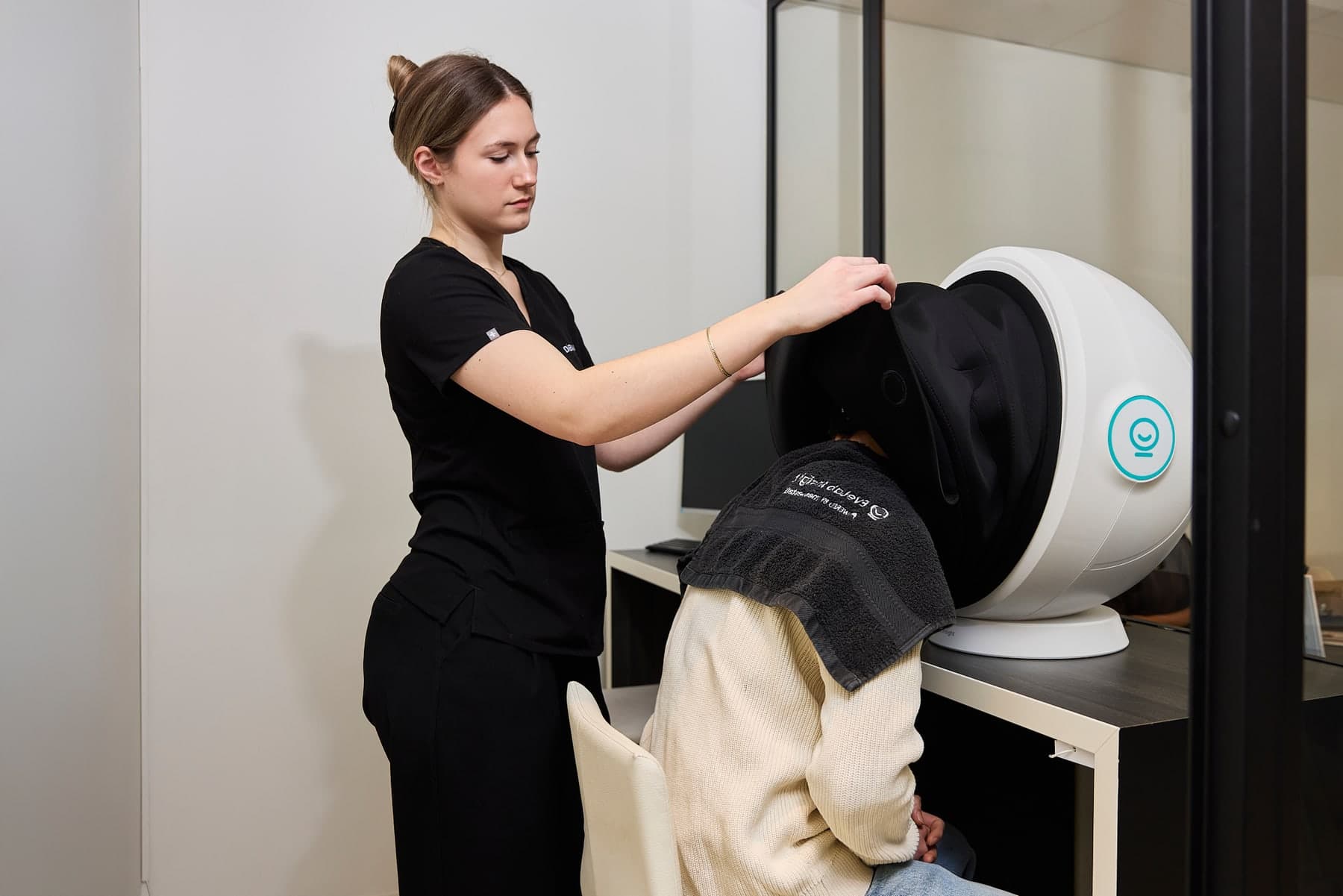
The EVE-M measurement records how dark and how widespread the pigmentation is before we start. With pigmentation we measure per season rather than per session, because the picture moves with the year.
How deep it sits matters just as much. Pigmentation can lie in the epidermis, in the dermis or in both, as it often does with melasma. Surface pigmentation responds faster and to more treatments; deeper pigmentation takes more time and a different choice. Under UV light that difference is visible; with the naked eye it is not.
That is also the most honest way to see whether it works. Pigmentation changes slowly, and your eye gets used to it.
More about the skin analysisWhat we measure here
- Pigmentation
- How dark and how widespread, mapped objectively
- Depth
- In the epidermis, in the dermis or in both. That decides the outlook and the choice of treatment
- UV exposure
- What the sun has already done, including what you cannot see
- Texture
- Whether unevenness plays a part alongside colour
Every axis is measured again at each check-up, under the same lighting. That way a difference later is something you see rather than something you have to take on faith.
What we use for this
Medical peels
from € 140From light to strong. The strength decides how deep it goes and how much you flake.
Microneedling with the SkinPen
from € 180Medically certified microneedling. It works on the layer where the structure of your skin sits.
Dermapen 4
from € 180Microneedling with vibrating needles that pass through the skin evenly.
Nordlys IPL for pigmentation
from € 75Light on pigmentation and sun damage. The pigment first comes to the surface and then fades.
Cosmelan
€ 720A six-month programme against hyperpigmentation, with a mask at the clinic and products at home.
Dermamelan
€ 920The more intensive approach to pigmentation, usually for melasma. Six months, with a strict routine at home.
Frequently asked questions
Will my pigmentation go away completely?
With sun damage, often largely. With melasma, control is more realistic than disappearance, and we would rather say that now than after five sessions. So which of the two you have decides the answer.
What is the best treatment for pigment spots on the face?
That depends on the type of pigment and how deep it sits, and we determine that with a measurement. Sharply defined spots from the sun often respond to light, in a series of separate treatments. For stubborn pigment there is a programme: Cosmelan for sun damage and individual spots, Dermamelan for melasma.
Why do pigmentation spots suddenly appear?
What you see now often started years earlier: pigment begins deeper in the skin than where you see it. Separate spots with a clear edge come from UV that adds up over years. Larger, hazy patches on both sides of your face often have a hormonal side: pregnancy and the pill are known factors, and heat can also stir them up. And after a spot or a small wound a dark mark can remain, because your skin makes pigment while it heals.
What is the difference between age spots and pigmentation spots?
Pigmentation spots is the umbrella term. An age spot, also called a sun spot, is one kind: an even brown patch with a sharp edge on your hand, temple or décolleté, where pigment has built up after years of sun. Melasma is another kind: symmetrical brown patches with hazy edges, often after a pregnancy or the pill. They look alike and call for a different approach.
Why can I not start in the summer?
Because you would then be working against the sun for four months. Pigment cells that have just been treated respond extra strongly to UV. You would be paying for a result you lose again in September.
Does sunscreen really help that much?
With pigmentation, daily protection gives you more than any treatment does, and we earn nothing from it.
I have darker skin. Can I be treated?
Yes, and it asks for a different approach. With skin types IV to VI the chance of new pigmentation from the treatment itself is higher, so we go more carefully and more slowly. We discuss that beforehand.
When are pigmentation spots dangerous?
A spot that changes shape or colour, or that bleeds, should be assessed by your GP. That is not scaremongering but the right route. We do look at it and refer you on if that is needed.
Can I do anything about the spots on my hands?
Yes, and hands are honestly the most awkward area: they get the most sun and they are the easiest to forget. Treatment is possible; keeping up the protection is the real work.
Where can I have pigment spots removed in Rotterdam?
At Diba Clinics, at Weissenbruchlaan 166 in Rotterdam, on the north side of the city. You park in the street. The route and the opening hours are on our contact page.
How much does it cost to remove pigmentation spots?
With IPL, a session at Diba Clinics in Rotterdam costs € 75 for the nose, € 150 for the cheeks, € 200 for cheeks, nose and chin, and € 250 for the whole face. Usually three to six sessions are needed, four weeks apart, so for the whole face it comes to € 750 to € 1,500. A medical peel costs from € 140, microneedling from € 180, the Cosmelan programme € 720 and Dermamelan € 920. You will hear which approach fits your spots after the measurement.
Why the season counts with pigmentation
The skin analysis can be done all year round. That way we have a starting point ready for the moment the season does work in your favour.
Book a consultationNot sure yet? Ask your question