


Age spots
removed
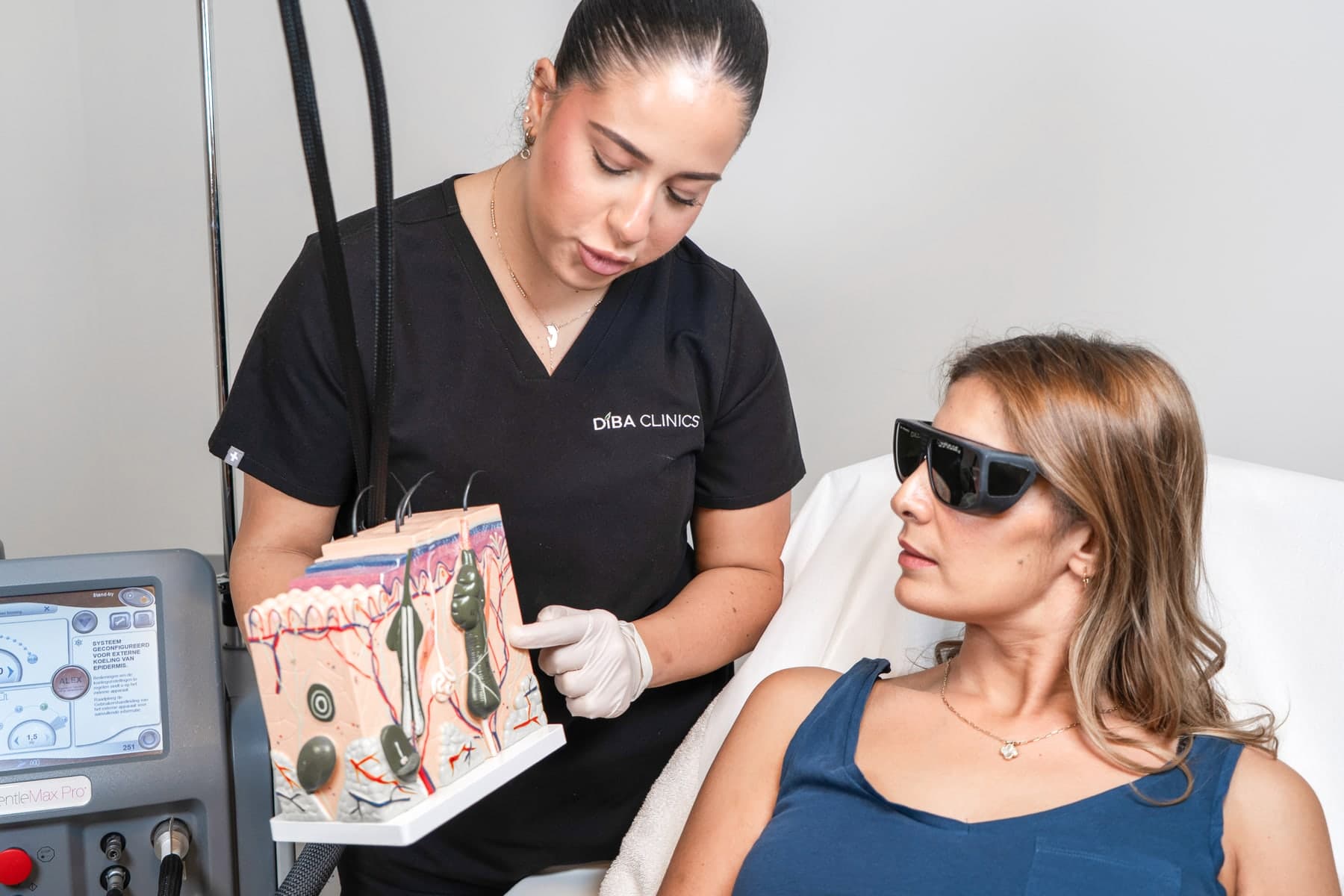
Age spots and sun spots are harmless and respond well to treatment. We remove them with IPL or laser, and one or two sessions is usually enough.
The therapist assesses each spot first. If anything about the shape or the colour is changing, it goes to your GP first.
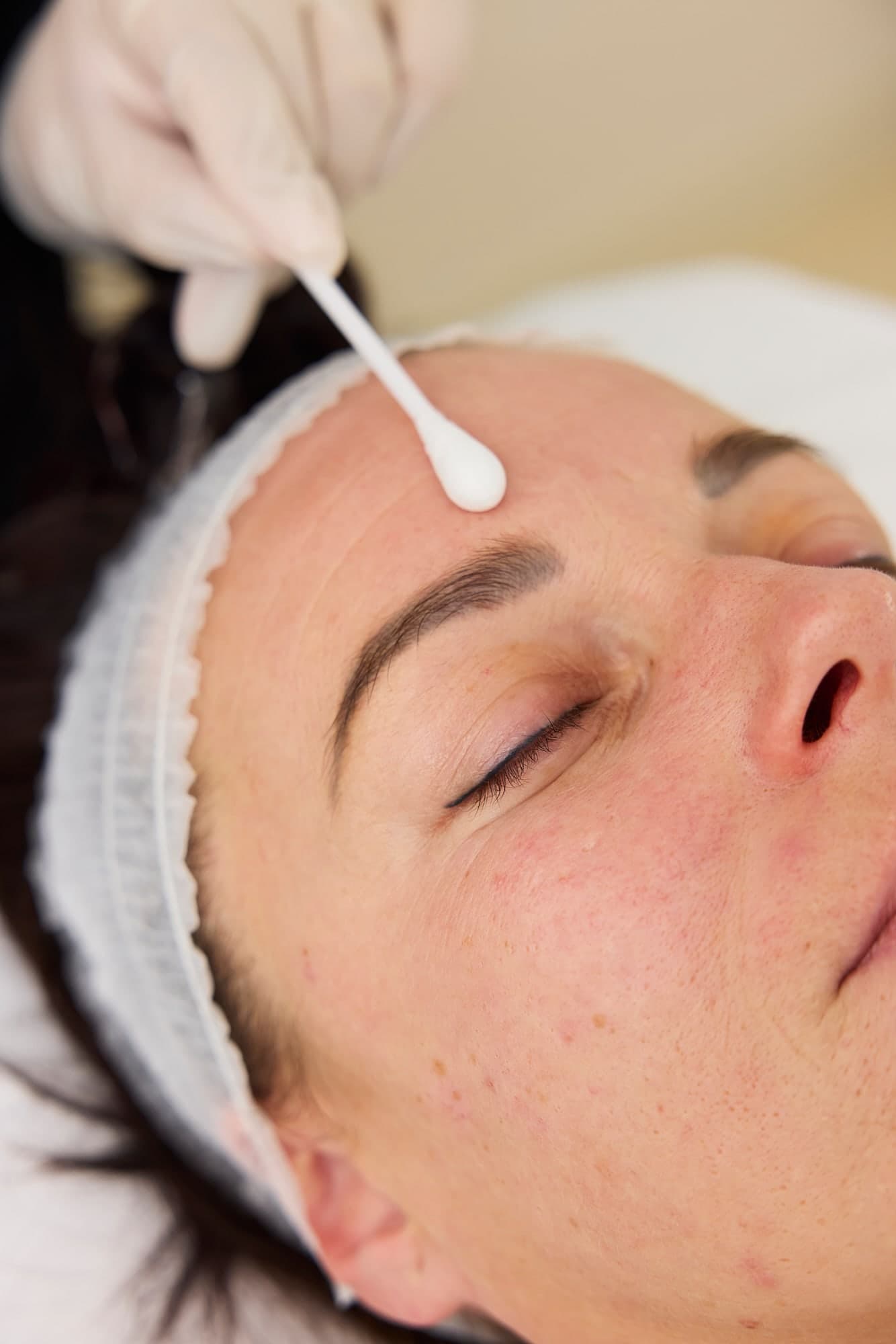
Age spots and sun spots are harmless and treat well. At Diba Clinics in Rotterdam we remove them with IPL or with a medical peel; one or two sessions are usually enough. IPL costs per session € 75 for the nose, € 150 for the cheeks, € 200 for cheeks, nose and chin and € 250 for the whole face, a peel from € 140. If there are many spots or the pigment keeps coming back, a Cosmelan programme for € 720 is an option. Protect your skin from the sun every day afterwards.
What we look at
The therapist assesses shape, edge and colour, and records the spot in an image. That way it can be seen later whether anything has changed.
Shape, edge and colour
The therapist looks at whether the colour is even and whether the edge runs sharply. That separates a sun spot from something else.
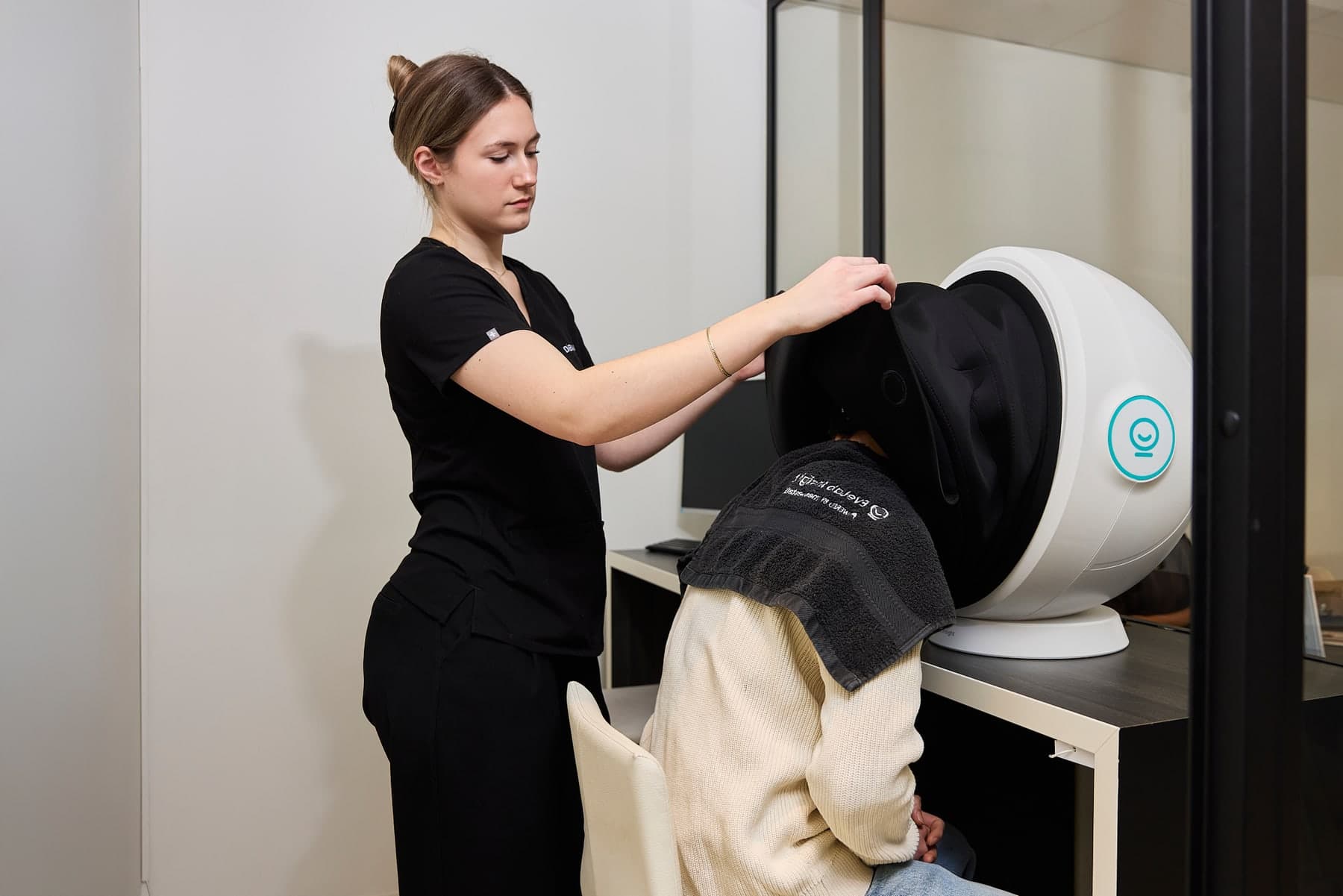
Under UV light
Under that, how much pigment sits deeper in the skin becomes visible. That decides how many sessions to count on.
Recorded in images
We photograph the spot under fixed lighting. At a following appointment we put the images side by side and you see what has changed.
Then a doctor looks at it first, and we treat it after that.
A ragged edge, uneven colour, growth or itching are reasons to have it assessed first. If it is benign, we remove the spot here afterwards.
Four kinds of
brown spots
Four kinds of brown spot that look alike. If anything about a spot is changing, it goes to your GP first.
A flat brown spot
lentigo solaris, sun spot or age spot- How you recognise it yourself
- Does it feel completely smooth, is it even in colour with a sharp edge, and does it sit on a place that has had a lot of sun?
- What it is
- Pigment that has gathered in one place after years of sun exposure. Harmless, and the most common picture on this page.
- What we do
- This responds well to light. We first measure how much there is, including what you cannot see yet, and then treat it in a series.
An even, flat spot on a place that has had a lot of sun. This is the picture where light gives the most.
A rough brown bump
seborrhoeic keratosis- How you recognise it yourself
- Can you feel with your fingertip that it sits above the skin, and is the surface grainy or waxy rather than smooth?
- What it is
- A benign overgrowth of skin cells. Despite its appearance this has nothing to do with sun damage and it is not a mole either.
- What we do
- Light does nothing here: the pigment sits in tissue that protrudes above the skin. Removal is possible, but only after assessment.
This is not an ordinary sun spot. Treating it before anyone has looked at it is exactly what should not happen here.
Large patches on your cheeks
melasma- How you recognise it yourself
- Is it roughly equal on both sides, with soft edges rather than sharp ones? And did it appear during a time of hormonal change?
- What it is
- A different mechanism from a sun spot: hormonally driven and far more sensitive to light and heat. Treating it wrongly demonstrably makes it worse.
- What we do
- This is covered by its own programme, with different rules and a different pace. The melasma page explains that.
This is not an ordinary sun spot. Treating it before anyone has looked at it is exactly what should not happen here.
A spot that is changing
suspicious lesion- How you recognise it yourself
- Has the spot changed over the past few months: bigger, darker, uneven in colour, or with a ragged edge?
- What it is
- We cannot assess that. Anything that changes should be looked at before anything is done with it.
- What we do
- We do not treat this and we certainly do not laser it away. You go to your GP first, even if it is probably nothing.
This is not an ordinary sun spot. Treating it before anyone has looked at it is exactly what should not happen here.
What helps and what we advise against
With pigmentation, sun protection is not advice afterwards but part of the treatment. Without it, it comes back and the money is gone.
This works
- Assessing first whether a spot is harmless, and referring rather than treating when in doubt
- A skin analysis under UV light, because that shows pigment that is already there and not yet visible
- Sun protection, every day and all year. Without it the spots come back and the rest does not work
- Light on flat, even spots, in a series with time in between
- Saying honestly that new ones can appear as long as you are in the sun
We advise against this
- Burning off everything brown. A spot that is changing should be assessed first
- Treating melasma as though it were a sun spot. That makes it worse rather than better
- Hydroquinone creams on your own. That belongs under supervision
- Treating in summer without agreements about the sun. That is money thrown away
- Starting on tanned skin
Under UV you see what is still to come.
Pigment starts deeper in the skin than where you see it. Under UV light, what is already there and has not yet come through at the surface becomes visible, and that is often more than people expect.
Confronting, and useful: it explains why new spots seem to keep appearing without sun protection. They were not new; they were already there.
More about the skin analysisWhat we measure here
- Visible pigmentation
- The spots as you see them in the mirror now
- Underlying pigmentation
- What lies deeper and comes through later
- Sun damage
- How much the skin has had to take over the years
Every axis is measured again at each check-up, under the same lighting. That way a difference later is something you see rather than something you have to take on faith.
What we use for this
Medical peels
from € 140From light to strong. The strength decides how deep it goes and how much you flake.
Nordlys IPL for pigmentation
from € 75Light on pigmentation and sun damage. The pigment first comes to the surface and then fades.
Cosmelan
€ 720A six-month programme against hyperpigmentation, with a mask at the clinic and products at home.
Frequently asked questions
Can an age spot turn into skin cancer?
An ordinary age spot is harmless. Other spots look like one at first, and those are not always harmless. If a spot grows, changes colour, itches or bleeds, you see your GP first, even if it is probably nothing. We do not treat such a spot, and we certainly do not laser it away.
Do they come back after the treatment?
The treated spot does not come back, but new ones can appear as long as your skin keeps catching sun. That is why sun protection here is not advice afterwards but part of the treatment.
Why do I see more spots after the measurement than in the mirror?
Because pigment starts deeper in the skin than where you see it. The measurement shows what is already there, and that is sometimes confronting. It is also useful: it explains why new ones seem to keep appearing without protection.
Can this be done on my hands too?
Yes, and that is often the place people find it bothersome first. The skin there is thinner and heals more slowly, so we work more carefully than on the face.
Can you remove age spots yourself?
Removing them, no. We advise against using bleaching creams with hydroquinone on your own: that belongs under supervision, and creams from the internet regularly contain hydroquinone or mercury, outside any control. What you can do yourself: sun protection every day, even on a grey day, and a cap or hat. Without that the spots come back and the rest does not work.
What does it cost to have age spots removed?
At Diba Clinics in Rotterdam, an IPL session with the Nordlys costs 75 euros for the nose, 150 euros for the cheeks, 200 euros for cheeks, nose and chin, and 250 euros for the whole face. A medical peel costs from 140 euros, and the Cosmelan programme 720 euros including products. What it comes to for you depends on how many spots there are and where they are; you hear that during the consultation. It costs 50 euros; if you have a treatment in the same appointment, that amount comes off again.
Book a consultation at Diba Clinics
At the skin consultation we assess the spots and measure, under UV light, the pigment you cannot see yet. After that you know what is possible and what belongs somewhere else first.
Book a consultationNot sure yet? Ask your question