


Milia
and white bumps removed
In everyday speech and in the consulting room, a stye means two different things. What people usually mean is a milium: a hard white bead that sits there for months, does not hurt and cannot be squeezed out. That is gone in seconds.
A milium we remove with a fine needle, in a few seconds per bead. If it is red, warm and painful, it is an inflammation; come by then, because the approach is a different one.
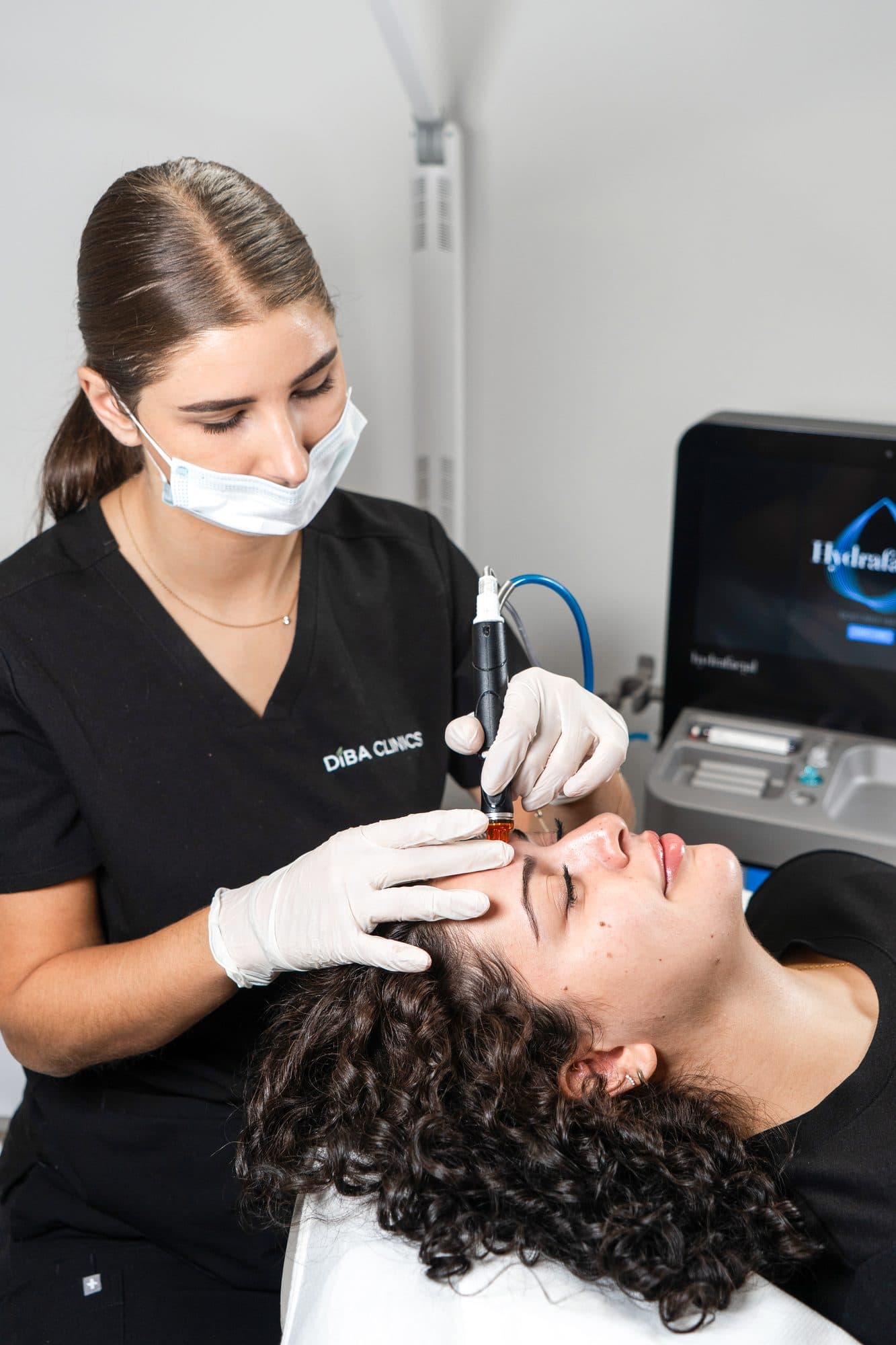
A milium, the hard white bump that stays for months and cannot be squeezed out, is removed by a skin therapist at Diba Clinics in Rotterdam with a fine needle, in a few seconds per bump. If the bump is red, warm and painful, it is an inflammation and the approach is different. Come in first so we can see what it is.
How we remove milia
A fine needle opens the bead and the contents come out. Per milium that takes a few seconds, and no wound is left.
Looking first, with magnification
The skin therapist looks at each bead up close. If something among them is not a milium, you hear that straight away and not halfway through.
One prick per bead
The skin above it is opened with a sterile needle and the contents lifted out. A few seconds per bead, and you feel a prick like having a splinter taken out.
Done, and you can go
There is no anaesthetic, no plaster and no recovery time. Sometimes a red dot is visible for a few hours, and after that nothing.
Then this is only half your story.
Separate white beads are a thing on their own. If you also see blocked pores, spots or a shiny T-zone, it is congestion and the acne page is the better way in.
White bead or
inflamed gland?
White and hard on one side, red and painful on the other: that difference decides whether it can go here or goes to your GP.
A hard white bead
milium, plural milia- How you recognise it yourself
- Is it white or yellowish-white, not red, does it not hurt, and can you not squeeze anything out of it?
- What it is
- A tiny cyst of keratin, enclosed under the epidermis. There is no opening to it, which is why squeezing does not work.
- What we do
- Opening it with a sterile needle and lifting the contents out. That takes a few seconds per bead and nothing is left to see.
A sterile needle, a few seconds per bead, and nothing is left to see. Almost always a one-off treatment.
A red, painful bump on the eyelid edge
hordeolum, commonly known as a stye- How you recognise it yourself
- Is it red, warm and tender, and did it appear in days rather than months?
- What it is
- An inflamed gland at the edge of the eyelid. This is what a stye is medically, and it is something quite different from a small white bump.
- What we do
- Nothing. This belongs with your GP and often clears up on its own with warm compresses. We do not lance it here.
Around the eye we take no risk that serves no purpose. This belongs with your GP, who will refer you on if needed.
A firm lump in the eyelid
chalazion- How you recognise it yourself
- Is it in the eyelid itself rather than under it, does it feel firm, and is it barely or not at all painful?
- What it is
- A blocked oil gland in the eyelid that has become encapsulated. Unlike a stye it usually does not hurt, and it stays longer.
- What we do
- Nothing here either. This belongs with your GP or an eye doctor, who will refer you on if needed.
Around the eye we take no risk that serves no purpose. This belongs with your GP, who will refer you on if needed.
A black or dark dot
open comedo, blackhead- How you recognise it yourself
- Is the top dark rather than white, and can you see an opening in the skin?
- What it is
- Not a milium but a blocked pore that is open. The dark colour is oxidised oil and not dirt.
- What we do
- This belongs with tackling blemishes and not with a needle prick. If there is more of it, the acne page is the better way in.
What helps and what we advise against
With milia the answer is usually short: if it is the right bump, it is done in one appointment.
This works
- Establishing first whether it is a white grain or an inflammation, because that decides between your GP and us
- Opening milia with a sterile needle, one by one, in a treatment of minutes
- Looking for a trigger: an eye cream that is too rich, sun damage, or something that damaged the skin
- Referring to your GP with anything that is red, painful or warm
We advise against this
- Pricking something that is inflamed. Around the eye that is a risk with no need for it
- Squeezing it yourself. There is no opening in it, so you only damage the skin around it
- Recommending a cream as removal. A cream does not open an enclosed milium.
- Scheduling several appointments unnecessarily. Removing a milium is usually a one-off treatment.
Frequently asked questions
Can you remove a milium yourself?
Better not, and squeezing does not work either: there is no opening to it. A blackhead has a pore channel to the outside; a milium is completely enclosed under a thin layer of skin. Squeezing therefore only damages the tissue around it.
Why do I get so many milia?
A milium is a tiny cyst filled with keratin, enclosed under the outer skin layer. If new ones keep appearing, there is often a cause: for some people an eye cream that is too rich, for others years of sun damage or something that has damaged the skin. We look at that when we remove them.
Does a milium go away by itself?
That depends on what it is. A stye, a red and painful bump on the edge of the eyelid, often clears up by itself with warm compresses; for that you see your GP. A milium, a hard white bump, has often been there for months and cannot be squeezed out; with us it is gone in seconds.
Does having them removed hurt?
You feel a prick per bead, comparable to having a splinter taken out. No anaesthetic is needed and you can simply leave afterwards.
Do they come back?
The treated beads do not. New ones can form, and then we look for a trigger: in some people that is an eye cream that is too rich, in others years of sun damage.
How many can be done at once?
Usually everything that is there, in one appointment. If there are many, we sometimes spread it out to give the skin rest. You hear that beforehand and not halfway through.
What does this cost?
That depends on the treatment that suits your skin, and we work that out at the consultation. The consultation costs 50 euros; if you have a treatment in the same appointment, that amount comes off again. You then hear straight away how many sessions it takes and what the total will be. Every price per treatment is published on the price page.
Just let us look. It is often done in no time.
With milia the appointment is short and one-off. If it turns out to be something else, you hear that straight away and we refer you on rather than trying it.
Book a consultationNot sure yet? Ask your question