


Skin tags
removed
A soft, skin-coloured flap on a narrow stalk on your neck, underarm or groin is a skin tag. Harmless, it does not go away on its own, and it is usually sorted in one appointment.
We charge per quarter of an hour rather than per tag, so several in one appointment is usually better value. The skin therapist assesses each spot first, because all sorts of things hang from a neck that look like one.
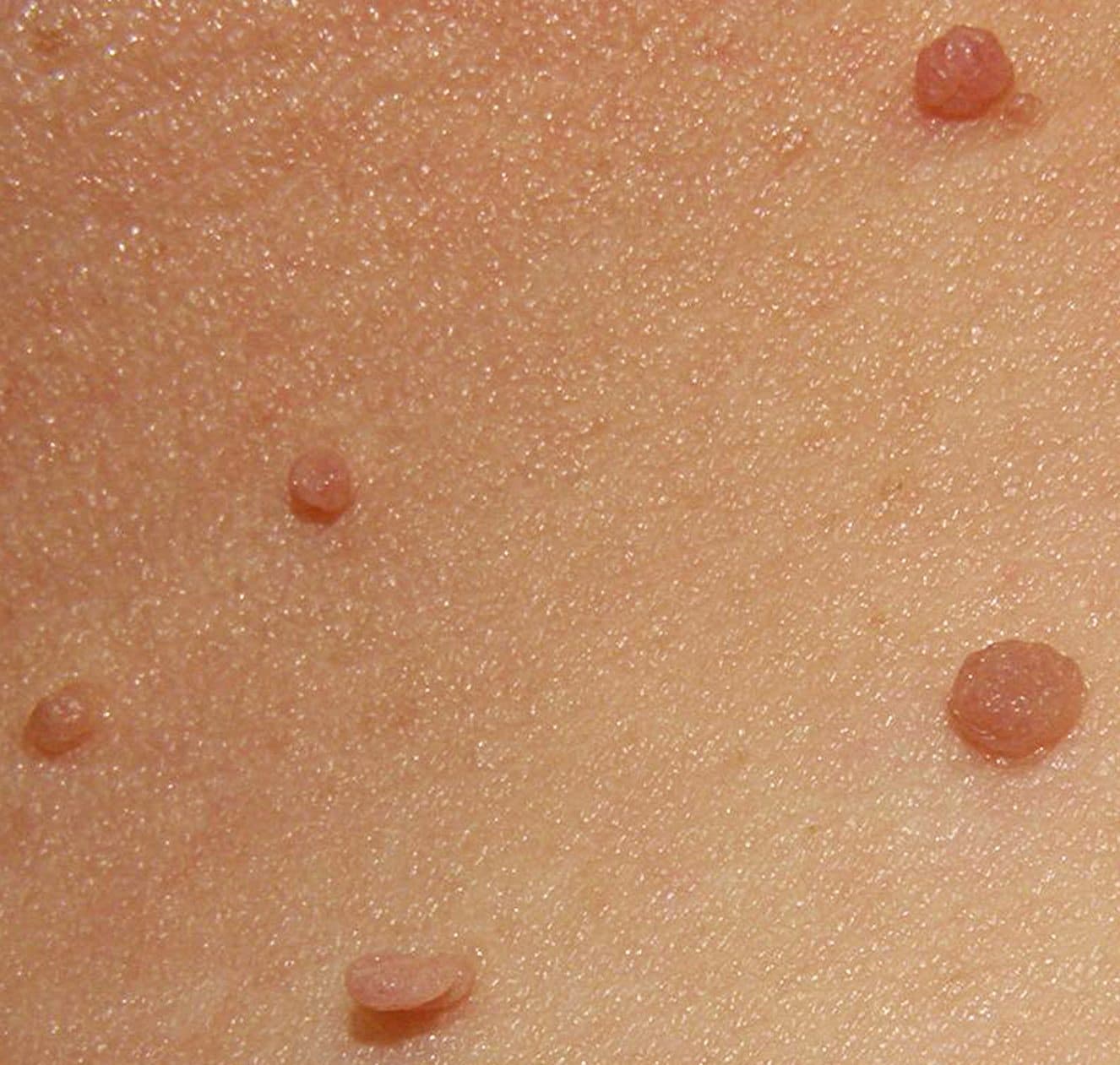
Skin tags, soft flaps of skin on a narrow stalk in your neck, armpit or groin, are removed by a skin therapist at Diba Clinics in Rotterdam, usually in one appointment. They are harmless and do not go away by themselves. We charge the treatment time per quarter of an hour, from € 30. If you are unsure whether it is a skin tag, we look first, and if it belongs with a doctor, we tell you.
What we look at
The skin therapist assesses the shape, the colour and whether the spot hangs from a stalk. That decides whether it can go here.
See whether there is a stalk
Does it hang loose from a narrower piece of skin, or is it attached across a broad base? A stalk points to a skin tag; a broad base points to something else that we look at separately.
Look at the colour
Skin-coloured or light brown and even throughout is ordinary. Uneven brown, black, or several colours mixed together is a reason to have someone else look at it first.
Think back
Was it exactly like this six months ago? Unchanged is reassuring. If it is growing, itching or bleeding, it goes to your GP and not to us.
Four kinds of growths
They sit in the same places and feel almost the same. The difference decides whether it is done here in a quarter of an hour.
A flap on a stalk
fibroma pendulans, acrochordon- How you recognise it yourself
- Does it hang from a narrower stalk, is it soft, skin-coloured to light brown, and has it been there unchanged for months?
- What it is
- A benign little outgrowth of skin and connective tissue, usually where skin rubs over skin. Harmless, and it does not go away on its own.
- What we do
- Assess and then remove, usually in one appointment. We charge per quarter of an hour, so several small spots at once does not cost more each.
Benign, on a stalk, and unchanged. Usually done in one appointment, and charged per quarter of an hour so that several spots together do not work out dearer.
A rough brown lump
seborrhoeic keratosis- How you recognise it yourself
- Does it sit on the skin with a broad base rather than on a stalk, and is the surface grainy or waxy?
- What it is
- Also benign, but different tissue and a different approach. It is often mistaken for a mole and is not one.
- What we do
- Have it assessed first. Removal is often possible, but it works differently from a stalked one.
This is not a fibroma, or it is changing. Removing it would mean there is nothing left to assess, and that is a mistake you cannot undo.
A raised mole
naevus- How you recognise it yourself
- Is it evenly brown, round and sharply bounded, and has it been there since your childhood or teens?
- What it is
- A mole and not a skin tag. We do not remove those, even if it bothers you: assessing and removing belongs with a doctor.
- What we do
- Referring on. A mole that has to go should be examined and we cannot do that.
This is not a fibroma, or it is changing. Removing it would mean there is nothing left to assess, and that is a mistake you cannot undo.
Something that is changing
suspicious lesion- How you recognise it yourself
- Has it changed over the past few months: bigger, darker, uneven in colour, or does it bleed without you touching it?
- What it is
- We do not know, and that is the point. Anything that changes should be assessed before anything is done with it.
- What we do
- We do not remove this. You go to your GP first, even if it is probably nothing.
This is not a fibroma, or it is changing. Removing it would mean there is nothing left to assess, and that is a mistake you cannot undo.
Then this is not the place.
Assessing and removing pigmented spots belongs with a doctor, who can have the tissue examined. We do not remove them, not even when they bother you.
What helps and what we advise against
With a skin tag the answer is usually short: if it is the right spot, it is done in one appointment.
This works
- Assessing every spot before anything happens to it, even when you know exactly what you want
- Removing benign skin tags, usually in one appointment
- Charging per quarter of an hour, so that several small spots at once do not cost more each
- Referring to your GP with anything that is changing or is not clear
- Explaining why they sit in those places, because then you understand why new ones appear
We advise against this
- Removing something that is changing. That should be assessed by a doctor first
- Removing something that is changing. Then there is nothing left to examine
- Tying it off with thread or snipping it with nail scissors yourself. That goes well for a long time and once it does not
- Promising no new ones will ever appear. The predisposition and the friction stay
Fibroma removal
Removing skin tags with coagulation, usually in one appointment. We charge the treatment time per quarter of an hour.
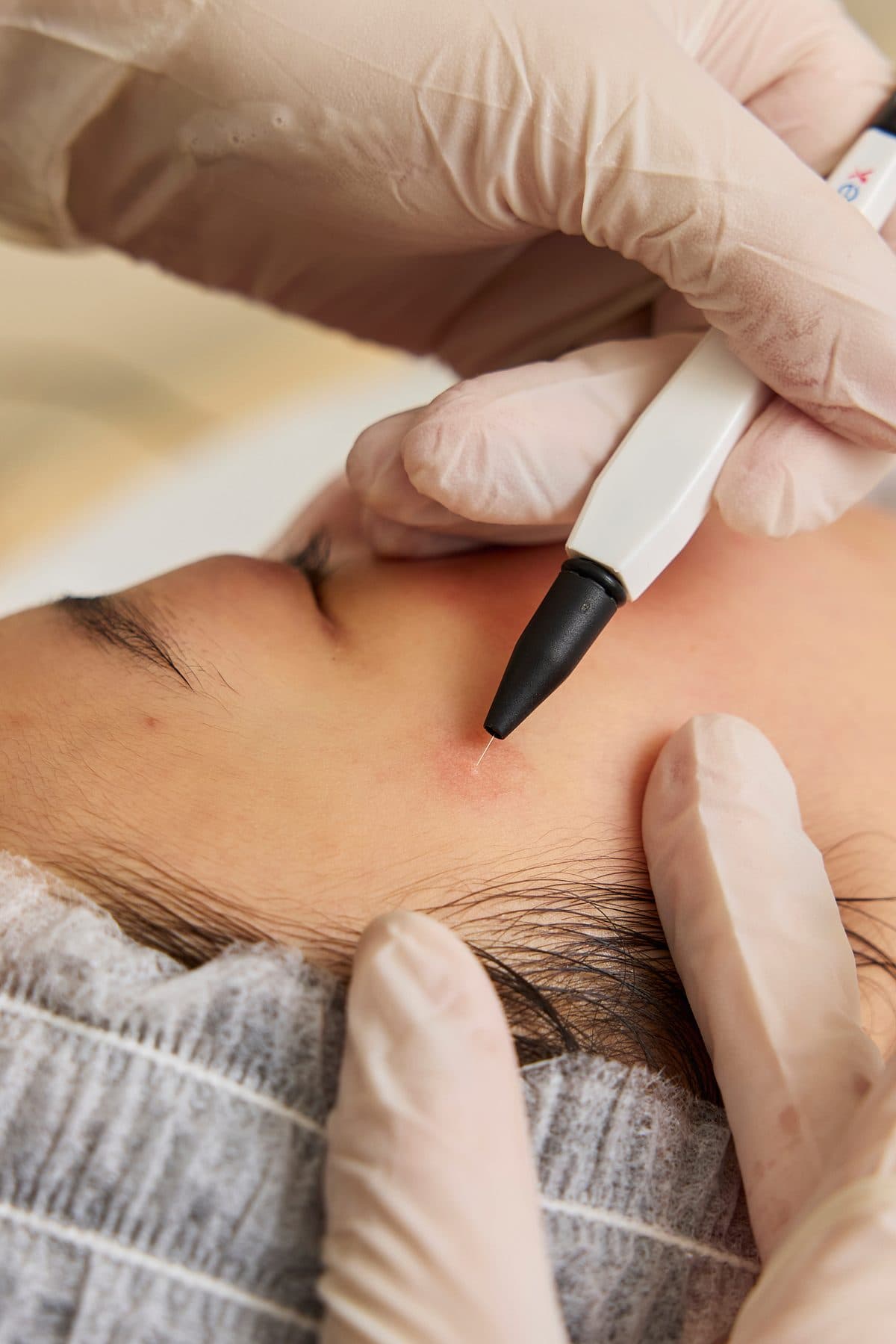
Fibroma removal, during the treatment
What you notice in the chair
Short and precise. The skin tag is numbed with a cream or an injection and then removed; the whole thing takes about a minute per spot.
A small scab is left that comes off within a week to ten days. Touching it is the only way to turn it into a scar.
We charge per quarter of an hour and not per spot, so several in one appointment is usually better value than coming back a few times.
- Per quarter of an hour
- € 30
Make an appointment right away
If you have not been here before, it starts with an intake: we measure your skin and go over what is possible. That fee is waived if we treat you in the same appointment.
Frequently asked questions
Why do I get them on my neck and underarms?
In those places skin rubs over skin, and that is where these little outgrowths form. Clothing, a necklace or a bra strap speed it up. Predisposition plays a part too: in some people they come by the dozen.
Can a skin tag go away by itself?
No. A skin tag is a benign little outgrowth of skin and connective tissue: harmless, and it does not go away by itself.
Can a skin tag be malignant?
A skin tag itself is benign. But not every growth is a skin tag: this page shows four kinds. If a spot grows, itches or bleeds, it goes to your GP and not to us, even if it is probably nothing.
Can I tie them off myself?
We would rather you did not, and that is not a sales argument. It goes well for a long time and once it does not, and that once is an infection in a neck or a scar on an eyelid. On top of that you would be cutting away something nobody has looked at.
Do they come back?
A removed skin tag does not come back, but new ones can form elsewhere. The predisposition and the friction are not changed by a treatment.
How is a skin tag removed?
With coagulation. The skin tag is first numbed with a cream or an injection and then removed with a fine handpiece; that takes about a minute per spot. Several spots are done one after the other within the same quarter of an hour.
How long does recovery take?
A small scab remains that comes off within a week to ten days. Picking at it is the only way to turn it into a scar. With a small skin tag, a red dot usually remains afterwards that fades within weeks.
Is a scar left behind?
With a small skin tag usually a red dot that fades over weeks. The larger the base, the greater the chance that something stays visible. We discuss that beforehand per spot and not afterwards.
How much does skin tag removal cost?
€ 30 per quarter of an hour. We charge per quarter of an hour and not per skin tag, so several in one appointment is usually cheaper than coming back a few times. Most people are done in one appointment.
Is it painful?
Short and sharp per spot, and it is quickly over. For larger or sensitive spots we numb it.
Why per quarter of an hour and not per item?
Because the number matters less than the time. Anyone with twenty small ones would otherwise pay twenty times over for the same quarter of an hour's work.
Book a consultation at Diba Clinics
With benign skin tags it is a short appointment, charged per quarter of an hour. If something among them turns out to need assessing, you hear that before we start.
Book a consultationNot sure yet? Ask your questionPhoto at the top: Jmarchn, CC BY-SA 3.0, via Wikimedia Commons.