


A slackening jawline
and dropping cheeks
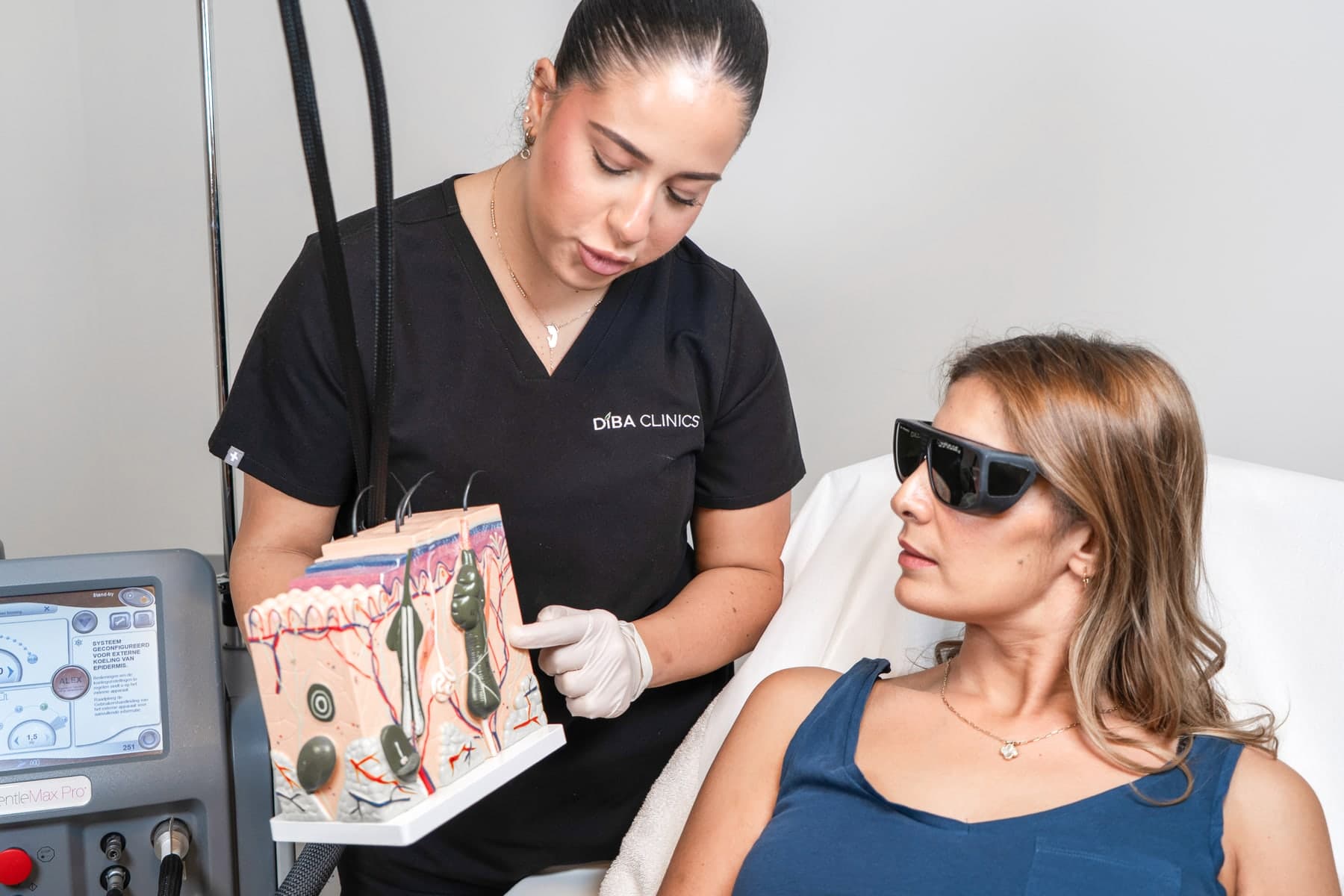
A dropping jawline and cheeks we treat with techniques that get collagen production going: microneedling with the SkinPen or the Dermapen 4, fractional laser with the Fotona, and radiofrequency. That gives firmer tissue and a tighter line.
Which technique suits you depends on your skin and on the stage the laxity is in. The skin therapist establishes that at the intake, and usually it is a combination.
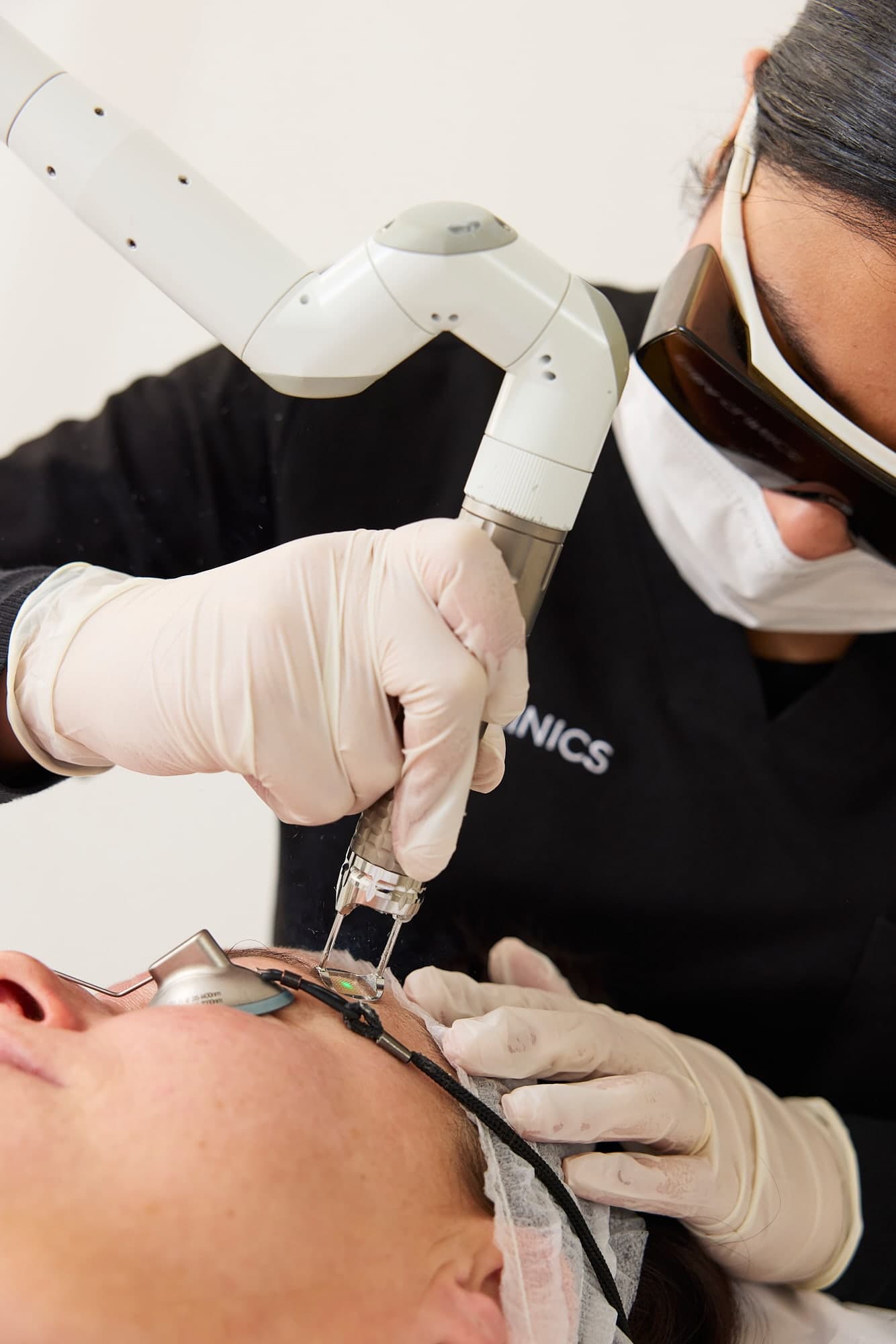
At Diba Clinics in Rotterdam we treat a sagging jawline and cheeks with techniques that stimulate collagen production, such as Fotona 4D, four laser steps in one session, for € 370 per session or € 995 for a course of three. The full 4D protocol, including the neck and jawline, costs € 575. This makes the tissue firmer. For truly loose skin, surgery is the answer, and we tell you so.
What there is to gain
The therapist looks at your skin standing and lying down. The difference between those two pictures shows what a treatment can give.
Assessed standing
The skin therapist looks at your face upright and at rest. That is how you look at the moments when you notice it yourself, and that is where we count from.
Compared lying down
Then the same face lying down, where gravity has no grip. The difference between those two pictures shows how much firmness there is to gain.
Recorded in images
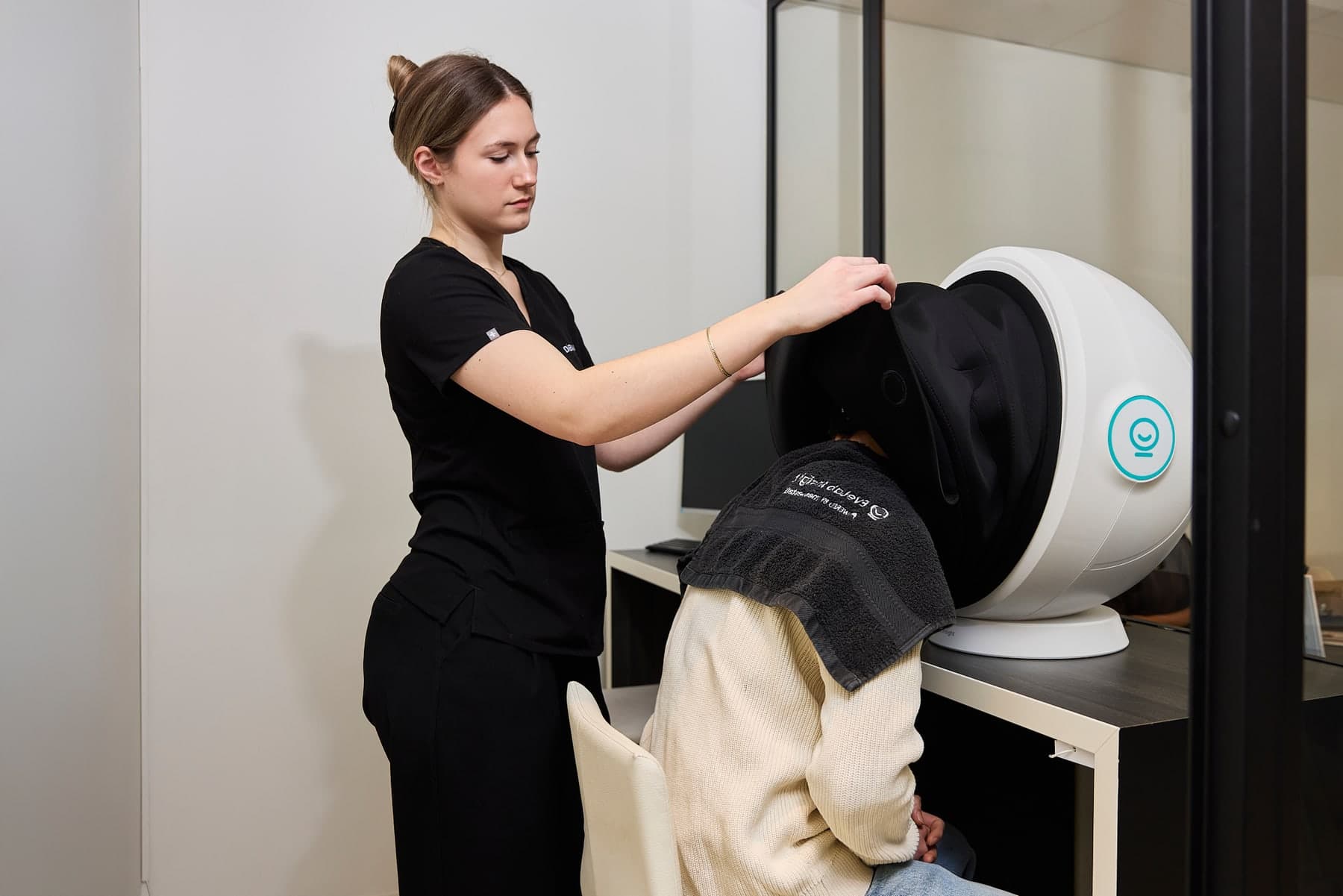
We take both photos under fixed lighting. At a following appointment we put them side by side, so that you see the change rather than estimate it.
The four stages
Laxity, volume loss and skin that has truly let go get mixed up and ask for three different things. Only the first is our trade.
The skin springs back more slowly
loss of elasticity- How you recognise it yourself
- Gently pinch a fold on your cheek or the back of your hand and let go. If the fold stays for a second, that is what you are measuring.
- What it is
- Elastin and collagen decline, which makes the skin spring back more slowly. This is the earliest stage and the stage in which a treatment gives the most.
- What we do
- Getting repair going in the deeper layers, with laser or needling, in a series over months. There is gain to be had here.
There is still structure to build on. Count on a series over months, and on sharper rather than tight.
The jawline gets vaguer
loss of definition along the mandible- How you recognise it yourself
- Look straight ahead in the mirror and then with your chin slightly up. If the line becomes sharp again, this is about the skin and not yet about volume underneath.
- What it is
- The skin no longer holds the contour tight, while little has changed underneath. This is the concern most people come in here with.
- What we do
- Tightening the deeper layers along the jawline, in a course. Expect sharper, not tight.
There is still structure to build on. Count on a series over months, and on sharper rather than tight.
Your face has become narrower
volumeverlies- How you recognise it yourself
- Compare a photo from ten years ago. Has the face mainly become narrower rather than something hanging?
- What it is
- Fat pads in the face reduce and shift, and bone recedes. That is not a skin problem, even though you see it in your skin.
- What we do
- We do not do volume filling. Making the skin firmer is possible, and sometimes that is enough; if it is not, we say so.
This is about volume or about tissue that has to be removed, and that is not what a machine does. We then refer you on.
Skin that really hangs
dermatochalasis, laxity at an advanced stage- How you recognise it yourself
- Push the skin up towards your temple with two fingers. If you have to move it more than a centimetre to get what you want, this is what it is about.
- What it is
- Tissue that has genuinely let go and is not merely less firm. No machine puts this back, however often you come.
- What we do
- Here we say no, and we refer you on. That is not unwillingness: it is the difference between tightening and removing.
This is about volume or about tissue that has to be removed, and that is not what a machine does. We then refer you on.
Then laxity is not your subject.
Lines and laxity occur together but are not the same. If it is the lines themselves you care about, it starts with the difference between skin and muscle on the lines page.
What helps and what we advise against
Here patience is not a side issue. Collagen builds over months, and coming more often does not speed that up.
This works
- Establishing first whether it is about firmness, about volume, or about skin that has truly let go
- Tightening the deeper layers with laser, in a series with weeks in between
- A skin analysis, because change over months does not show in the mirror and does show in a measurement
- Daily sun protection, because UV radiation breaks down collagen and elastin
- Saying when the difference gets too small to be worth the investment
We advise against this
- Imitating surgery. What has let go is not fastened back here
- Filling volume. We do not work with fillers, and for a face that has become narrower that is often the answer
- Starting a series of treatments while the assessment shows that little improvement is to be expected
- Promising a result in weeks. Collagen building runs over months
- Treating tanned skin
Why we record it beforehand
Laxity changes slowly, and you look every day. So you notice progress as little as you notice decline. The EVE-M records your skin under fixed light and from a fixed angle, before the first session takes place.
That works both ways. It makes a difference demonstrable, and it also makes visible when little changes. The latter is a reason to stop or do something else, and not to carry on because a package still had sessions left.
More about the skin analysisWhat we measure here
- Elasticity
- How quickly the skin springs back, and where it no longer does
- Contour
- The line along the jaw and neck, recorded from a fixed angle
- Texture
- The surface, because that often changes before the shape does
Every axis is measured again at each check-up, under the same lighting. That way a difference later is something you see rather than something you have to take on faith.
What we use for this
Fotona TimeWalker
from € 150Fifteen treatments on one device, from a light laser peel to the complete 4D. Each with its own purpose.
Fotona 4D
from € 370Four laser treatments in one session. From the inside through the cheek to a closing peel.
Fotona 4D Men
On requestThe same protocol of four, set for the generally thicker skin of men.
SmoothLiftin
On requestCollagen stimulation from the inside, through the lining of your cheek.
PIANO skin tightening
On requestDeep, even heating to firm the face, jawline and neck.
VectorLift
from € 150A laser brow lift and firming of the forehead, without needles.
Fotona 4D Full Package
from € 575The full 4D protocol with the neck and the jawline included, in one appointment.
Frequently asked questions
Is laser an alternative to a facelift?
No. Tightening the skin and removing tissue are two different things, and we only do the first. What we do works in the stage before that, and once that stage has passed we say so.
From what age does a treatment for sagging skin make sense?
Age says little here. What matters is how much your skin still springs back, and the therapist establishes that in the consultation. If there is little to gain, you hear that, and that is the advice.
How long does the result last?
The process itself carries on, so it is not an end point but a shift. How long it stays noticeable differs a great deal per person; we agree beforehand when we measure again rather than naming a number.
Does a treatment for sagging skin hurt?
You feel warmth and sometimes short stings. Most people describe it as manageable, and no anaesthetic is needed. What you notice afterwards depends on the treatment and is on the treatment page.
What does a treatment for sagging skin cost?
Fotona 4D costs 370 euros per treatment and VectorLift starts at 150 euros. Which treatment suits your skin, you hear during the consultation. It costs 50 euros; if you have a treatment in the same appointment, that amount comes off again.
Book a consultation at Diba Clinics
At the skin consultation the therapist looks at how much your skin still springs back and measures what is there now. If there turns out to be little to gain, you hear that, and that is the advice.
Book a consultationNot sure yet? Ask your question